
Blog
Adoption vs Buying a Dog: The Truth About Puppy Mills (2026 Definitive Guide)

Every year on National Puppy Day, millions of adorable puppy photos flood social media. Behind those heart-melting images lies a serious issue few pet parents understand: the global puppy mill industry.
The choice between adopting vs buying a dog is more than a personal decision. It directly impacts animal welfare, the health of your future pet, and the future of ethical breeding.
In 2026, the pet industry is expanding rapidly across the world and particularly in India. Demand for puppies has surged, and unfortunately, so has unethical breeding.
This comprehensive guide explains:
- What puppy mills really are
- How to identify unethical breeders
- Why adoption is often the better choice
- How Indian pet parents can make responsible decisions
Planning to bring home a puppy?
Consult a MyFurries vet or pet advisor before adoption or purchase to ensure you choose a healthy and ethically sourced companion.
What is a Puppy Mill?
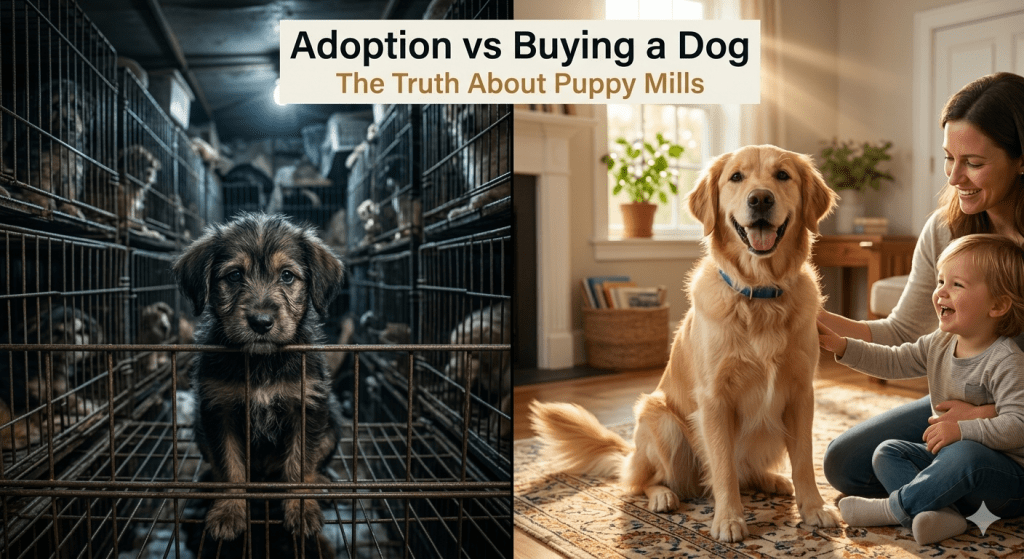
A puppy mill is a commercial dog breeding facility where profit is prioritized over animal welfare.
In such operations, female dogs are repeatedly bred without proper rest or veterinary care. Puppies are raised in overcrowded cages, often without socialization or proper nutrition.
The goal is simple: produce as many puppies as possible to meet market demand.
Common Characteristics of Puppy Mills
- Dogs kept in cages for most of their lives
- Poor sanitation and hygiene
- No proper veterinary care
- Continuous breeding cycles
- Minimal human interaction
Because puppies from mills appear cute and healthy initially, many buyers do not realize the hidden medical issues until months later.
The Global Puppy Mill Industry in 2026
Globally, awareness about puppy mills has grown significantly. Many countries have introduced stricter regulations to protect animals.
Several regions have adopted laws similar to “Lucy’s Law,” which prohibits pet stores from selling puppies sourced from commercial breeders.
However, the problem has not disappeared. It has simply moved online.
Today, thousands of puppies are marketed through:
- Social media advertisements
- Online classified platforms
- Pet marketplace websites
- Messaging apps
Because these platforms allow sellers to remain anonymous, identifying ethical breeders has become more difficult.
The Indian Perspective: Why Puppy Mills Are Growing
India’s pet industry has experienced rapid expansion over the past decade.
Urban pet ownership has increased significantly as more families adopt companion animals for emotional well-being.
Unfortunately, this demand has also fueled the rise of backyard breeders and illegal puppy farms.
The “Pedigree” Obsession
Many families associate foreign breeds with prestige and social status. Popular breeds in India include:
- Labrador Retrievers
- Golden Retrievers
- Siberian Huskies
- Pugs
- Shih Tzus
However, these breeds often struggle with India’s climate and require specialized care.
The KCI Registration Myth
Many sellers claim that a puppy is KCI registered to convince buyers that the dog comes from an ethical breeder.
While the Kennel Club of India maintains pedigree records, registration alone does not guarantee ethical breeding practices.
Unscrupulous breeders can still obtain registration papers without maintaining high welfare standards.
The Rise of the Indian Pariah Dog
In recent years, there has been a growing appreciation for India’s native breed: the Indian Pariah Dog, often called the Indie.
These dogs are naturally adapted to India’s climate and environment.
Advantages of Indie Dogs
- Stronger immunity
- Better heat tolerance
- Fewer genetic disorders
- Lower veterinary costs
- Highly intelligent and loyal
Many veterinarians and animal welfare organizations now encourage adoption of Indie dogs as a responsible alternative to buying imported breeds.
How to Spot a Puppy Mill: Warning Signs
Understanding how to spot a puppy mill can prevent heartbreaking experiences and expensive veterinary treatments later.
No Facility Visits Allowed
Ethical breeders welcome visitors who want to see where puppies are raised.
If a seller insists on meeting in a parking lot, roadside location, or offers only home delivery, it is a major red flag.
Multiple Breeds Available
Responsible breeders specialize in one breed.
If a seller offers multiple breeds at once, they are likely sourcing puppies from large breeding facilities.
Unusually Low Prices
Puppies sold far below typical market prices often come from unhealthy breeding conditions.
No Medical Records
A reputable breeder provides vaccination records, deworming history, and health testing documentation.
Identifying Ethical Dog Breeders
If you choose to buy a puppy instead of adopting, selecting a responsible breeder is essential.
Signs of an Ethical Breeder
| Indicator | What It Means |
|---|---|
| Health Testing | Parents tested for genetic diseases |
| Open Facility | Breeder allows visits to see living conditions |
| Limited Litters | Dogs are not bred continuously |
| Contracts | Agreement requiring responsible care |
| Lifetime Support | Breeder provides guidance throughout dog’s life |
Ethical breeders focus on improving the breed, not mass production.
The Benefits of Adoption
When comparing adopting vs buying a dog, adoption offers several advantages that go beyond cost savings.
You Save a Life
Animal shelters and rescue organizations often operate beyond capacity. Adopting directly helps reduce overcrowding.
Health Screening
Most rescue dogs are vaccinated, dewormed, and sterilized before adoption.
Temperament Matching
Rescue groups can help match families with dogs whose personalities suit their lifestyle.
Lower Costs
Adoption fees typically cover essential veterinary care, which significantly reduces initial expenses.
The Hidden Costs of Buying From Puppy Mills
While mill puppies may appear cheaper initially, long-term medical costs can be substantial.
Common health problems include:
- Hip dysplasia
- Respiratory disorders
- Heart defects
- Skin diseases
- Behavioral issues due to poor socialization
Veterinary treatments for these conditions can cost far more than the price of the puppy itself.
How MyFurries Helps Responsible Pet Parents
Choosing the right dog should never be rushed.
At MyFurries, our mission is to support ethical and informed pet parenting.
Expert Guidance
Our veterinary professionals and advisors help you evaluate whether a breeder or adoption source is trustworthy.
Verified Networks
We work with responsible rescue organizations and ethical breeders who prioritize animal welfare.
Ongoing Support
From nutrition advice to behavioral consultations, MyFurries provides long-term support throughout your pet’s life.
Before bringing home a puppy, schedule an online consultation with a MyFurries veterinarian for personalized guidance.
Final Thoughts: Your Choice Shapes the Future
Every purchase decision in the pet industry sends a powerful message.
When families choose ethical breeders or adopt from shelters, they help reduce the demand that fuels puppy mills.
Responsible pet parenting begins long before the puppy arrives home. It begins with informed choices.
This National Puppy Day, choose compassion, responsibility, and awareness.
Your future companion deserves nothing less.